 Pass the Exam Easily with Detailed 3-Level Practice | 1-Day Full Access Free
 Offer Ends in

Warning Signs
- 1/58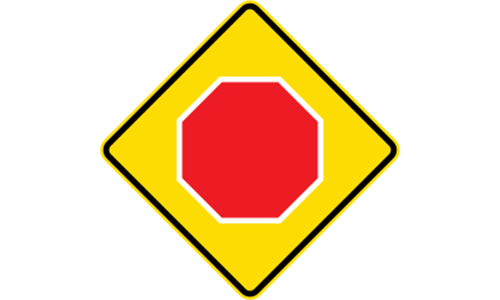
You must prepare to stop completely at the upcoming intersection or stop line.: your action while driving should be to begin slowing down significantly and be ready to bring your vehicle to a complete halt at the actual stop sign ahead.
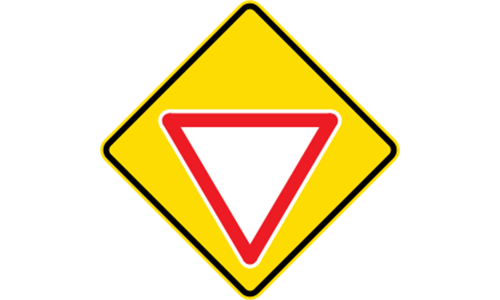
You must prepare to give way to intersecting traffic, slowing down and stopping if necessary.: your action while driving should be to reduce your speed and be prepared to yield to vehicles already on the main road, stopping only if absolutely necessary to avoid a collision.
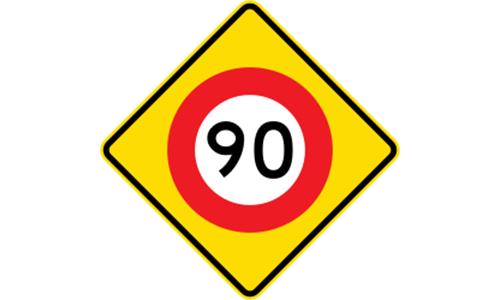
You must prepare to reduce your speed to 90 km/h or less.: your action while driving should be to begin adjusting your speed to comply with the upcoming 90 km/h speed limit.
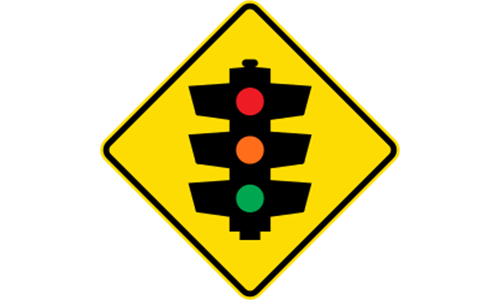
You must be prepared to stop or proceed according to the traffic light indication.: your action while driving should be to slow down and observe the traffic signals ahead, being ready to stop if the light is red or yellow.
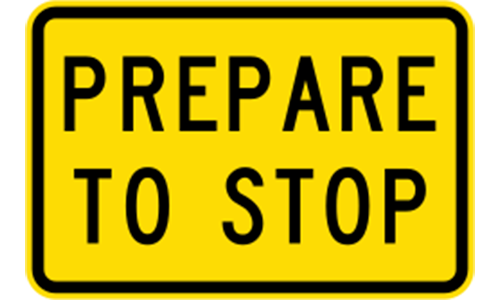
You must slow down and be ready to come to a complete stop.: your action while driving should be to begin decelerating significantly, anticipating a stop at an upcoming intersection or specific point.
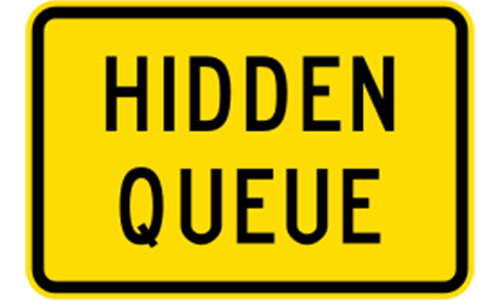
You must reduce your speed and be prepared for sudden braking due to stopped or slow traffic.: your action while driving should be to decrease your speed and increase your following distance, as there is a line of vehicles ahead that is not yet visible.
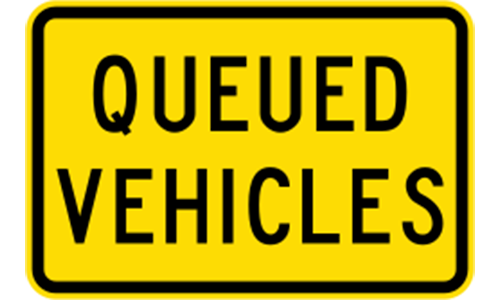
You must reduce your speed and prepare for slow-moving or stopped traffic.: your action while driving should be to slow down and maintain a safe following distance, as you are approaching an area with traffic congestion.
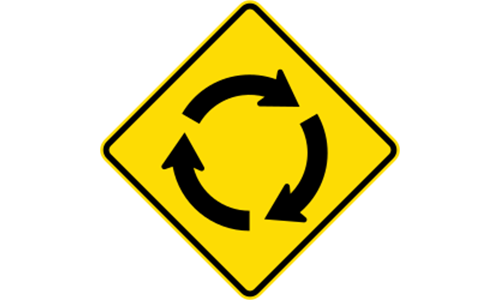
You must prepare to yield to traffic already in the roundabout and enter when safe.: your action while driving should be to slow down, be prepared to give way to circulating traffic, and choose the correct lane for your exit.
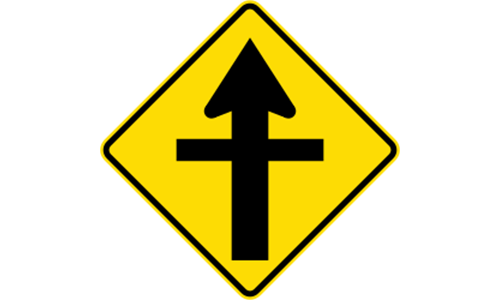
You must be aware that you have the right-of-way, but remain observant of other drivers.: your action while driving should be to continue on your path, as you are on a priority road, but still be ready for unexpected actions from vehicles on intersecting roads.
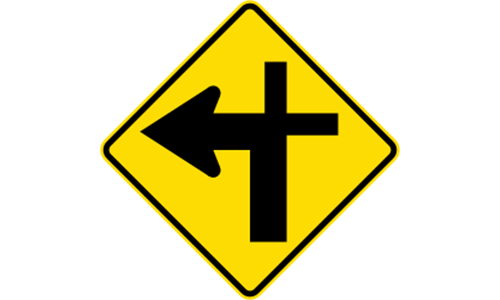
As you must, if on the priority road, prepare to turn left; if not, prepare to yield to traffic on the priority road.: your action while driving should be to understand the layout of the upcoming intersection and be prepared to follow the priority road or yield accordingly.
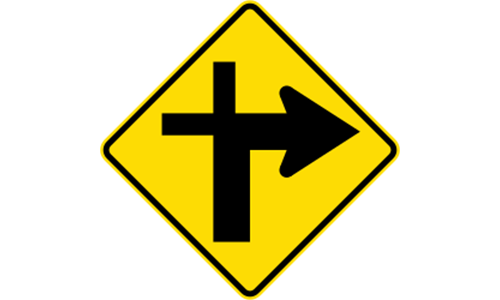
As you must, if on the priority road, prepare to turn right; if not, prepare to yield to traffic on the priority road.: your action while driving should be to understand the layout of the upcoming intersection and be prepared to follow the priority road or yield accordingly.
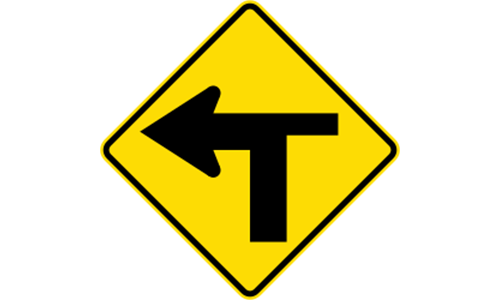
You must be aware of the T-junction and be prepared for priority traffic turning left.: your action while driving should be to anticipate traffic flow at the T-junction, especially if you are on the main road where priority turns left, or if you are on the side road and need to yield.
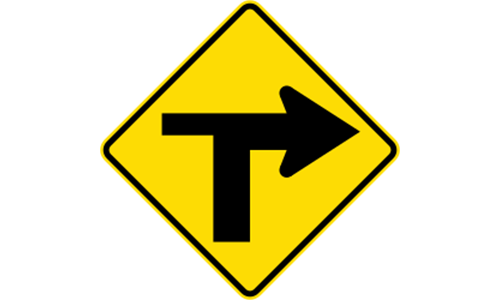
You must be aware of the T-junction and be prepared for priority traffic turning right.: your action while driving should be to anticipate traffic flow at the T-junction, especially if you are on the main road where priority turns right, or if you are on the side road and need to yield.
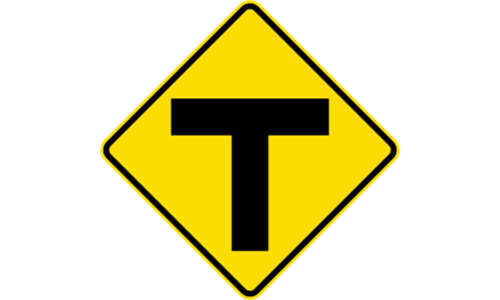
You must slow down and be prepared to yield, typically to traffic from the right.: your action while driving should be to reduce your speed, exercise caution, and be ready to give way to any vehicle entering the intersection from an unposted direction.
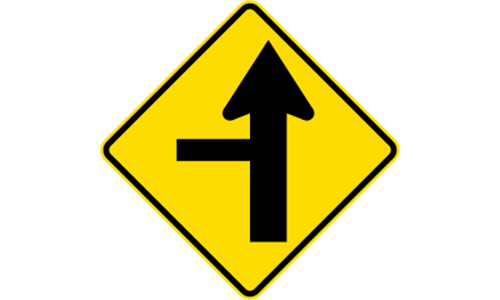
You must be aware of the side road joining from the left, expecting its traffic to yield.: your action while driving should be to continue with caution, as the side road joining from the left is controlled (meaning its traffic should yield to you).
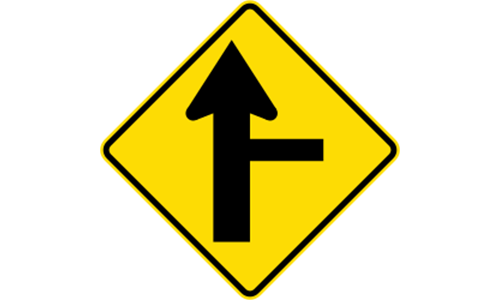
You must be aware of the side road joining from the right, expecting its traffic to yield.: your action while driving should be to continue with caution, as the side road joining from the right is controlled (meaning its traffic should yield to you).
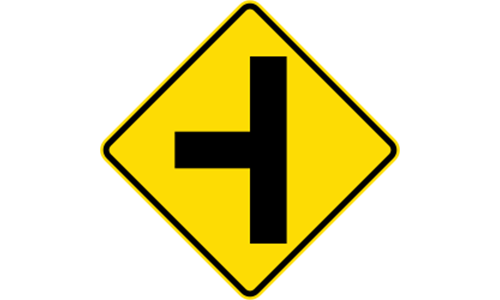
You must slow down and be extra cautious, prepared to yield to traffic from the left.: your action while driving should be to reduce your speed and exercise heightened awareness, as traffic from the uncontrolled side road on the left may not have a clear indication to yield.
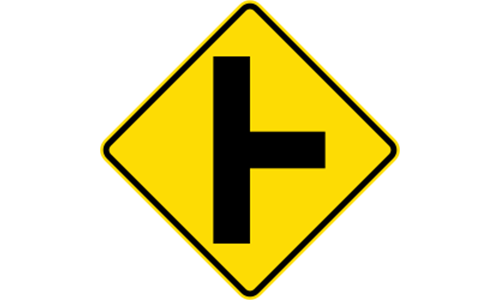
You must slow down and be extra cautious, prepared to yield to traffic from the right.: your action while driving should be to reduce your speed and exercise heightened awareness, as traffic from the uncontrolled side road on the right may not have a clear indication to yield.
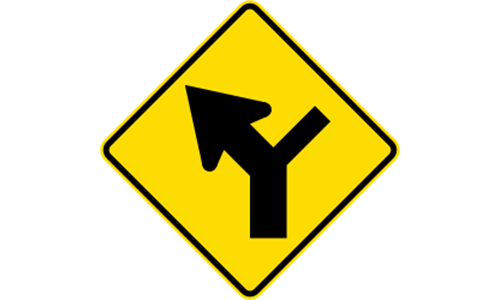
You must be aware of the Y-junction and prepare for traffic from the right side road, which is expected to yield.: your action while driving should be to approach with awareness, as traffic from the controlled side road on the right should give way.
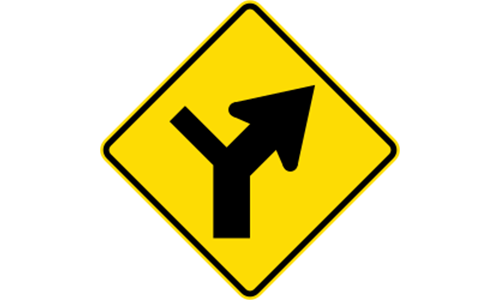
You must be aware of the Y-junction and prepare for traffic from the left side road, which is expected to yield.: your action while driving should be to approach with awareness, as traffic from the controlled side road on the left should give way.
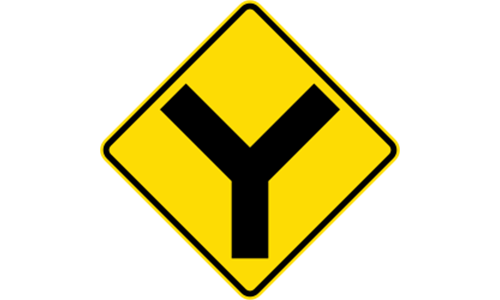
You must slow down and be very cautious, prepared to yield to traffic from either side road, especially from the right.: your action while driving should be to significantly reduce your speed and be ready to yield, as traffic from both joining roads at an uncontrolled Y-junction may not have designated right-of-way instructions.
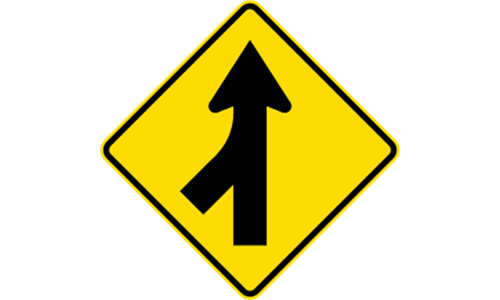
You must be prepared for traffic merging onto your road from the left, and adjust your speed and lane position to allow them to merge safely.: your action while driving should be to anticipate vehicles entering your lane from a merging lane on the left, requiring you to create space or adjust speed to facilitate a smooth merge.
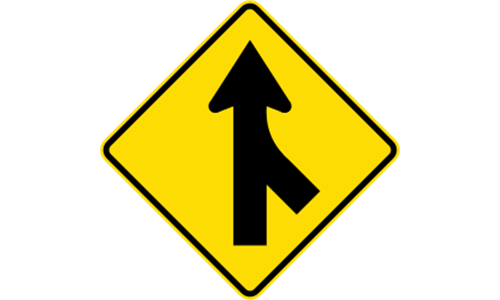
Adjust your speed and position to safely allow traffic to merge from the right.: This warning sign indicates that traffic from a merging lane will be entering the main road from your right, requiring careful adjustment to avoid collision.
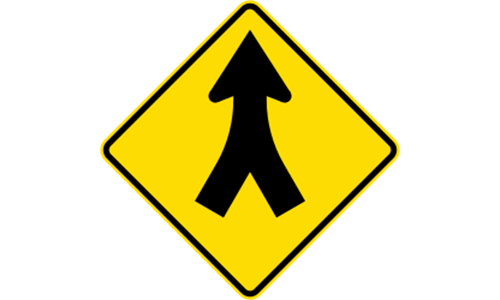
Prepare for traffic to merge from both sides, adjusting your speed and lane as needed.: This warning sign alerts you to merging traffic simultaneously from both the left and right, demanding heightened awareness and adaptive driving.
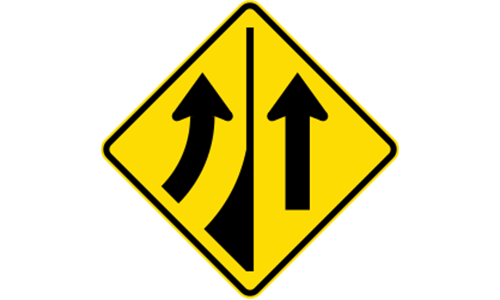
Be aware that your lane will soon be joined by another lane from the left.: This warning sign indicates that an additional lane will merge into your current roadway from the left, meaning the road will widen but traffic might consolidate.
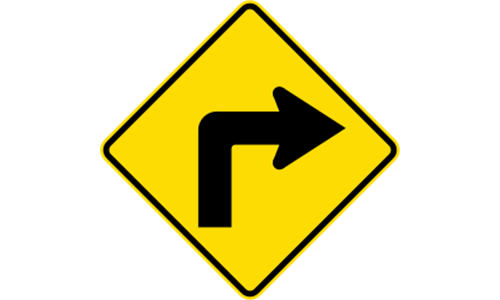
Significantly reduce your speed and prepare for a sharp right turn.: This warning sign indicates an extremely sharp right-hand curve ahead, necessitating a substantial reduction in speed to maintain control.
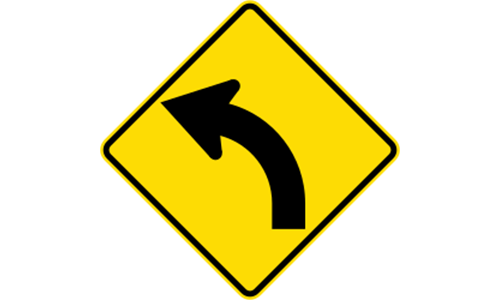
Reduce your speed and prepare for a curve to the left.: This warning sign indicates a significant left-hand curve ahead, requiring you to reduce speed to safely navigate the bend.
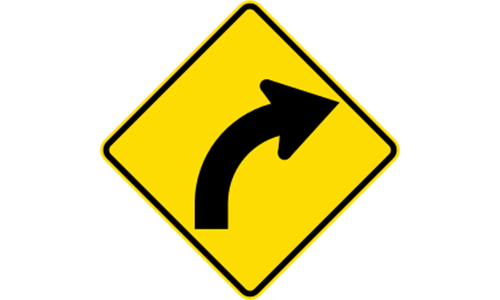
Reduce your speed and prepare for a curve to the right.: This warning sign indicates a significant right-hand curve ahead, requiring you to reduce speed to safely navigate the bend.
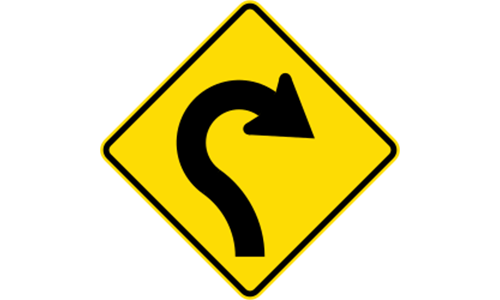
Reduce speed significantly for the tightening reverse curve.: This warning sign indicates a complex curve where the road turns right, then reverses, and the radius of the turn continues to decrease, requiring extreme caution and speed reduction.
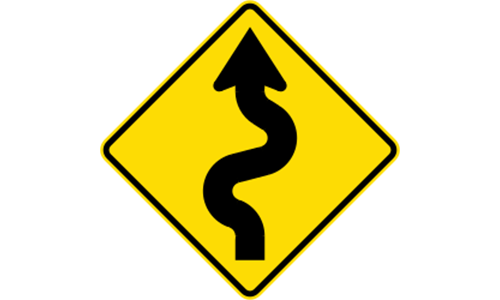
Reduce speed for upcoming series of curves, starting left.: This warning sign indicates that a sequence of bends is ahead, with the first curve turning to the left, demanding continuous speed adjustment and alertness.
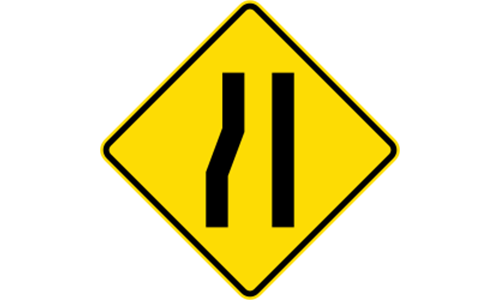
Prepare for the road to narrow from the left, adjusting your position.: This warning sign indicates that the lane or road ahead will become narrower on the left side, requiring drivers to be cautious and potentially adjust their lane position.
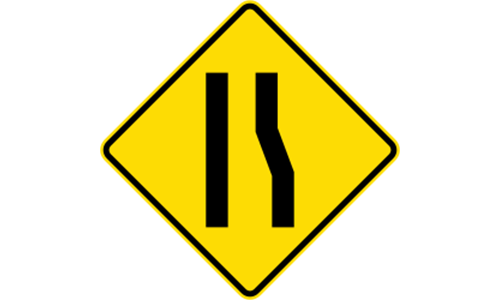
Prepare for the road to narrow from the right, adjusting your position.: This warning sign indicates that the lane or road ahead will become narrower on the right side, requiring drivers to be cautious and potentially adjust their lane position.
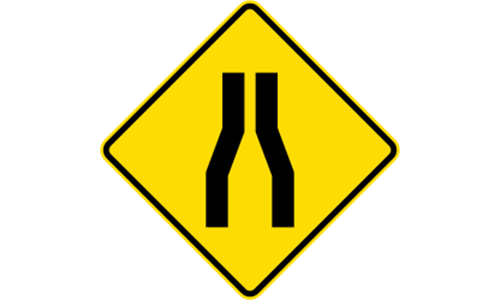
Prepare for the road to narrow from both sides, reducing speed and being cautious.: This warning sign indicates that the road ahead will narrow significantly from both sides, requiring drivers to reduce speed and exercise increased caution.
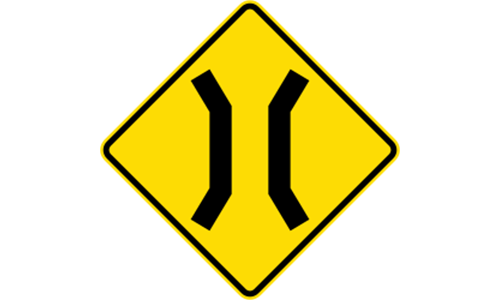
Reduce speed and proceed cautiously on the narrow bridge, especially if meeting oncoming traffic.: This warning sign indicates a narrow bridge ahead, where there might not be enough space for two vehicles to pass comfortably, requiring drivers to yield or proceed carefully.
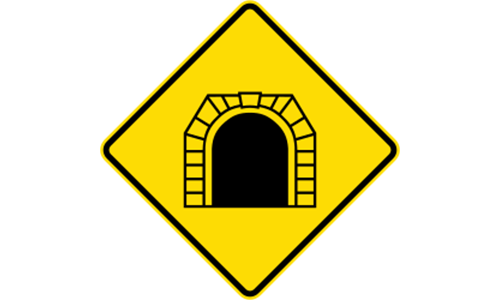
Turn on headlights and reduce speed before entering the tunnel.: This warning sign indicates a tunnel ahead, where lighting conditions change and ventilation might be different, requiring drivers to prepare for altered driving conditions.
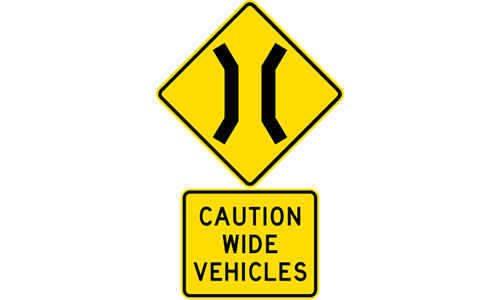
Be extremely cautious on the narrow bridge as wide vehicles might cross into your lane.: This warning sign specifically highlights a narrow bridge where large vehicles may momentarily encroach on your lane, demanding extra vigilance and preparedness to stop or slow down.
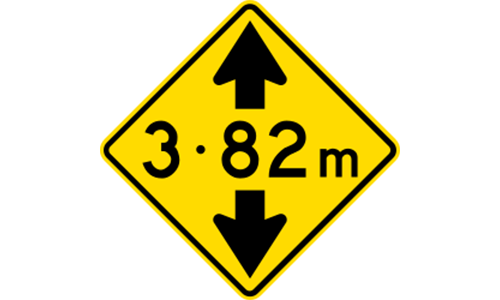
If your vehicle height exceeds the limit, find an alternate route.: This warning sign indicates the maximum permissible height for vehicles to pass under an overhead structure (e.g., bridge, tunnel), alerting drivers of tall vehicles to potential clearance issues.
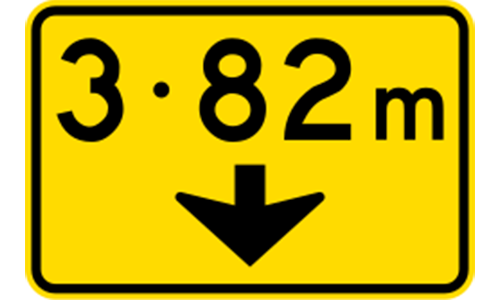
Check your vehicle height; if over 3.82m, do not proceed.: This warning sign explicitly states the maximum height clearance for an upcoming structure, serving as a critical alert for drivers of tall vehicles.
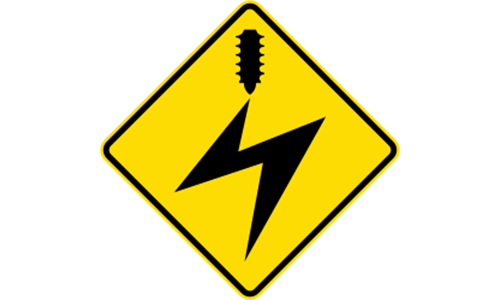
Be aware of overhead electrical cables and avoid contact, especially with tall vehicles.: This warning sign indicates the presence of overhead electrical cables, advising caution for all vehicles, particularly those of significant height or carrying elevated loads.
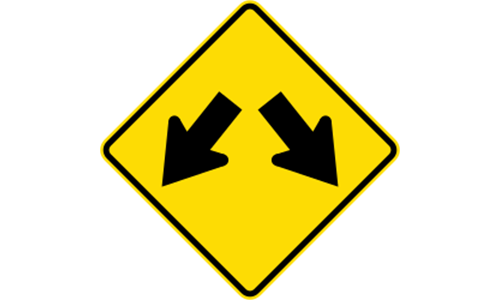
Be prepared for the road to split ahead and choose your appropriate lane.: This warning sign indicates that the road ahead will divide into two or more separate routes, requiring drivers to decide their direction and position their vehicle accordingly.
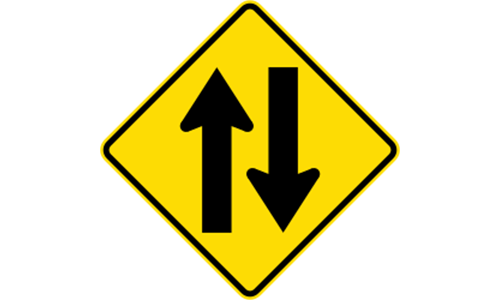
Be aware that the upcoming section of road will have oncoming traffic.: This warning sign indicates a transition from a one-way street to a two-way street, where you will encounter vehicles moving in the opposite direction.
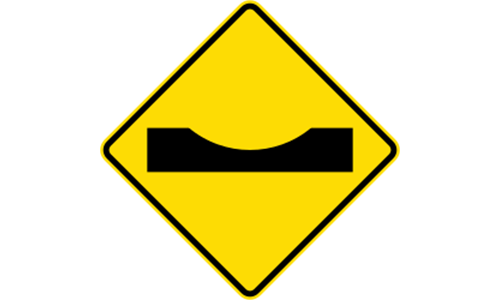
Reduce speed and prepare for a sudden depression in the road surface.: This warning sign indicates a low spot or depression in the road that can cause discomfort or loss of control if taken at high speed.
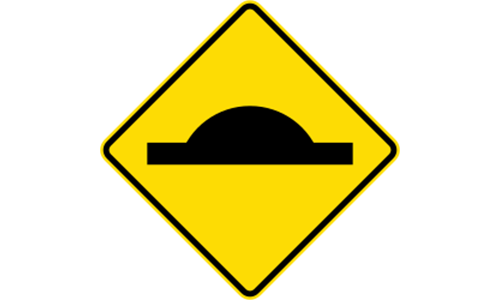
Reduce speed to cross the speed bump smoothly and safely.: This warning sign indicates an artificial raised area in the road designed to slow down traffic, requiring drivers to reduce speed to avoid damage or discomfort.
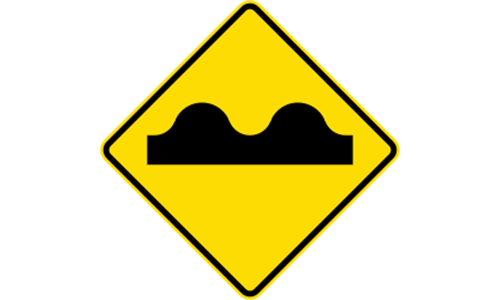
Reduce speed and be prepared for a rough or bumpy road surface.: This warning sign indicates that the road ahead has an uneven surface or multiple bumps, requiring drivers to reduce speed to maintain control and comfort.
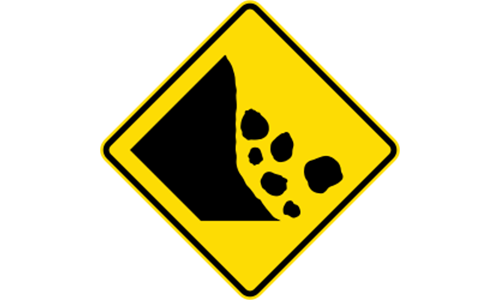
Drive cautiously and be alert for rocks or debris on the road from the left.: This warning sign indicates a risk of rocks or other debris falling onto the roadway from a hillside or cliff on the left, requiring increased vigilance.
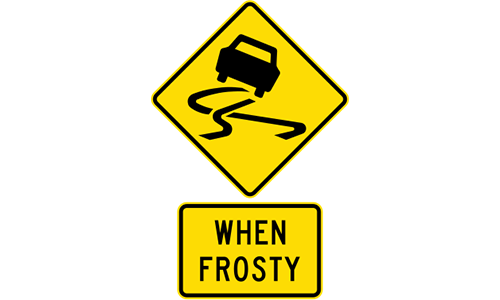
Drive with extreme caution as the road surface may be icy when temperatures drop.: This warning sign specifically warns that the road surface becomes slippery under frosty conditions, necessitating reduced speed and gentle maneuvers.
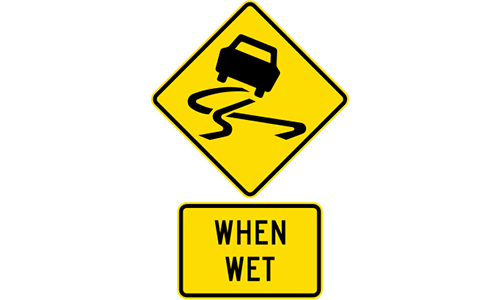
Reduce speed and drive cautiously as the road surface is slippery when wet.: This warning sign indicates that the road surface tends to lose traction when wet, advising drivers to reduce speed and increase following distance.

Drive carefully and be aware of loose material on the road, which can create dust or reduced traction.: This warning sign indicates a road surface with loose material that can be kicked up by vehicles (stir up), potentially affecting visibility or vehicle control.
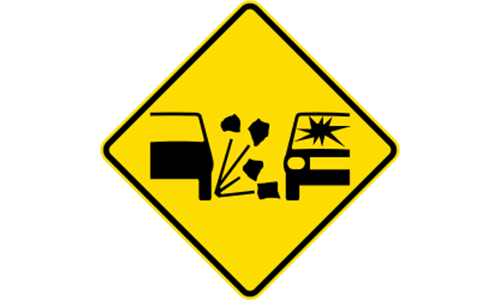
Prepare for an unspecified hazard; look for an accompanying sign for details.: This general warning sign indicates a specific danger ahead not covered by other standard signs, always appearing with a supplementary plate describing the exact hazard.
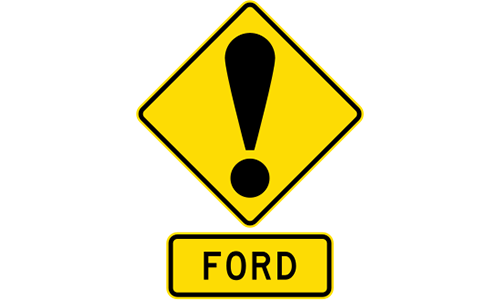
Reduce speed and prepare to drive through a shallow water crossing.: This warning sign indicates a ford ahead, which is a shallow stream or river crossing the road, requiring careful driving to avoid stalling or damage.
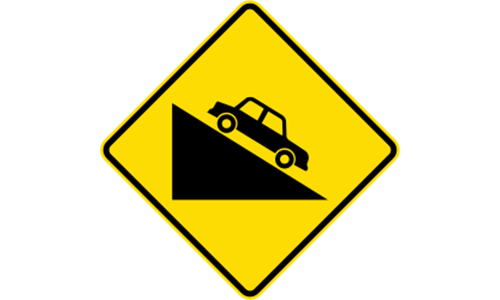
Prepare for a steep descent, selecting a lower gear to control speed.: This warning sign indicates a steep downhill grade ahead, requiring drivers to use engine braking or lower gears to prevent brake overheating and maintain control.
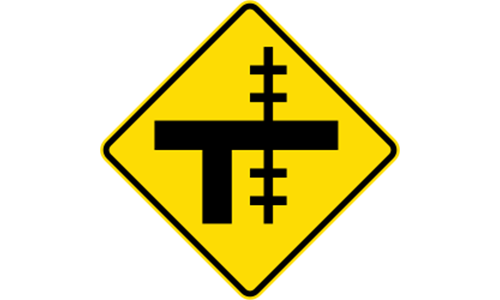
Slow down, check for trains, proceed with extreme caution.: This warning sign indicates an uncontrolled railway crossing at a T-junction to the right, requiring drivers to be highly vigilant for approaching trains before proceeding.
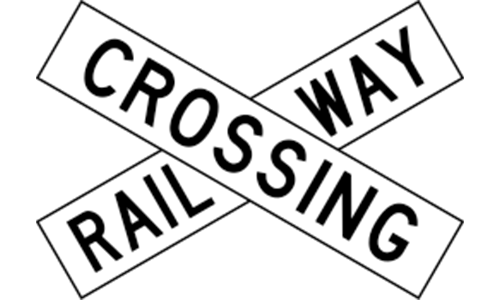
Yield to trains, stop if necessary.: This sign marks the exact location of a railway crossing, indicating that drivers must give way to any trains on the tracks.
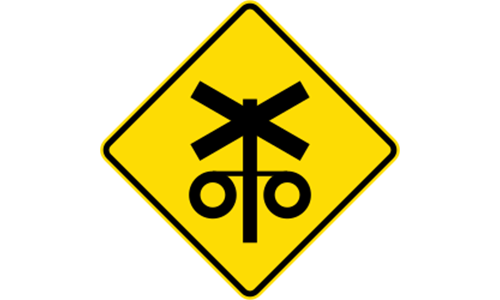
Prepare to stop for signals and gates.: This warning sign indicates an upcoming railway crossing equipped with active warning signals (lights, bells) and safety gates, requiring drivers to be prepared to stop.
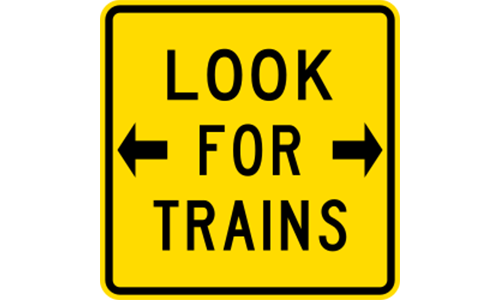
Stop, look both ways for trains.: This supplementary sign, often found at uncontrolled crossings, explicitly instructs drivers to check for trains from both directions before entering the tracks.
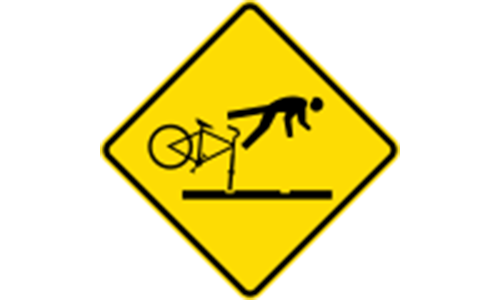
Cyclists dismount or cross tracks carefully.: This warning sign alerts cyclists to potential hazards posed by rail tracks, such as getting wheels caught, and advises caution or dismounting when crossing.
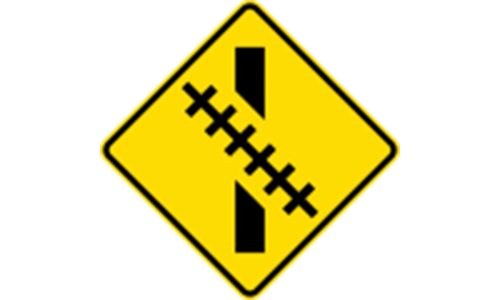
Reduce speed, cross tracks at an angle.: This warning sign indicates a railway crossing where the tracks intersect the road at a sharp or oblique angle, which can be hazardous for vehicles, especially motorcycles, if not approached carefully.
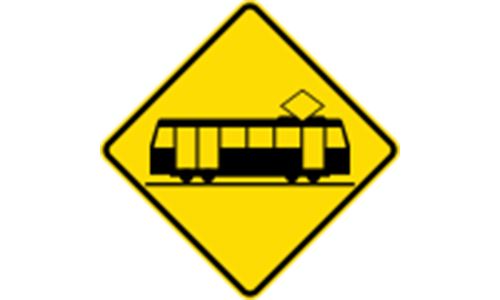
Be aware of tram or light rail crossing.: This warning sign indicates an upcoming crossing with light rail transit (trams or streetcars), requiring drivers to be vigilant for light rail vehicles.